Multi-Rail Payment Disbursement Strategy for Platform Payouts
Platforms need separate infrastructure for payouts, not mirrored acceptance systems.
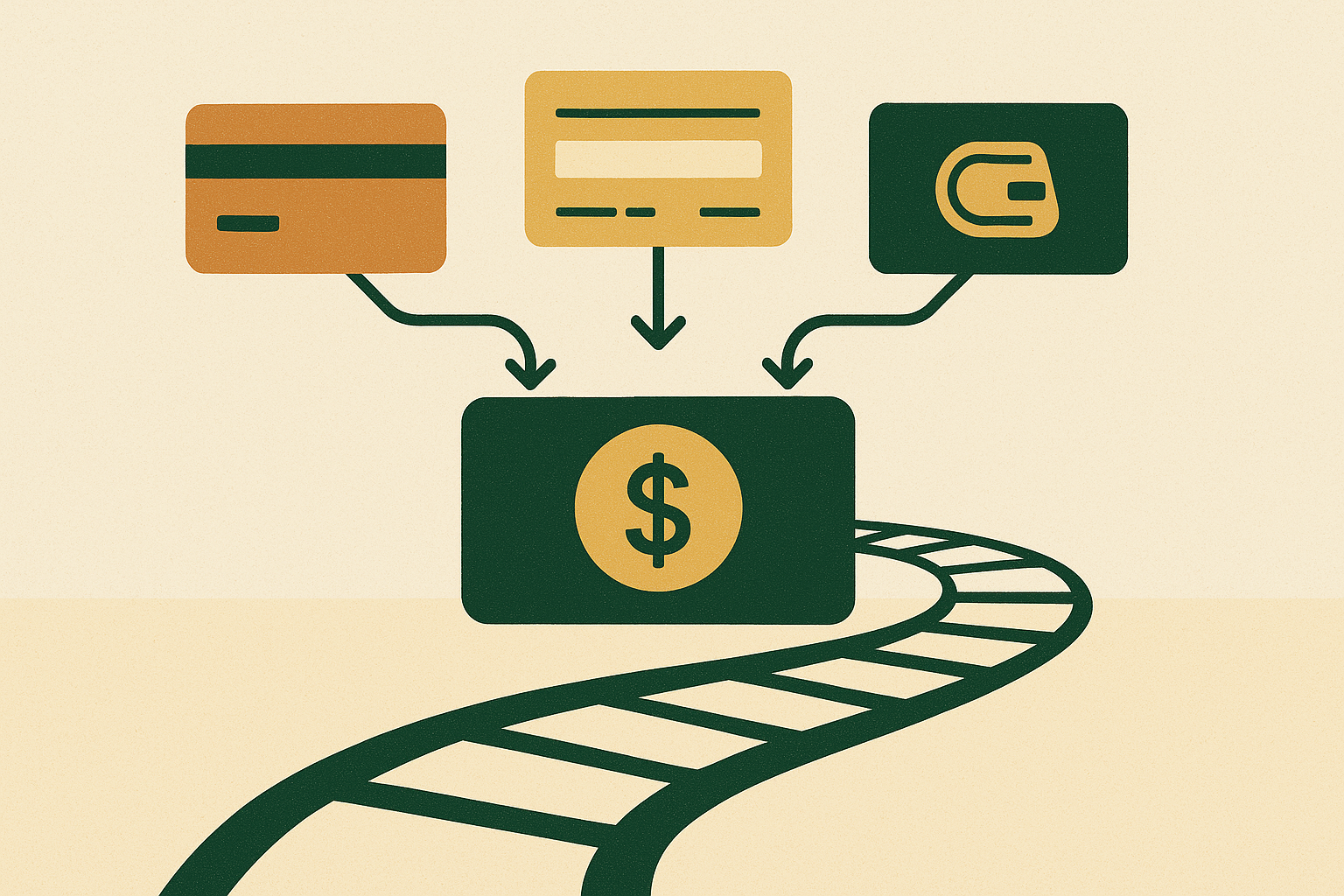
Most platforms inherit their payout infrastructure from the wrong mental model. They treat disbursement as acceptance run in reverse, a mirror image of the acquiring leg they already built. That assumption works until sellers, gig workers, or creators are waiting on money, and then the questions become operational: which rail, which corridor, which validation gates, and who bears the risk when a payout cannot be recalled.
Why payout and acceptance are fundamentally different infrastructure decisions
Acceptance and payout optimize for different variables. Acceptance optimizes for authorization rate and buyer conversion. Payout optimizes for cost, reach into the recipient's bank, and how much irrevocability risk the platform can tolerate. These objectives diverge so sharply that the two legs are frequently different systems even inside the same provider. A card network's acquiring side authorizes and captures, while its Original Credit Transaction side pushes funds outward with different fee schedules and different reversal mechanics.
The divergence becomes concrete in a single scenario: a platform that can accept a Visa card from a buyer in a given country cannot necessarily push a payout to that buyer's bank account in the same country. Pushing money out requires a card push product, a domestic real-time rail with a licensed local path, or a correspondent-banking wire, each evaluated separately, market by market. A domestic real-time rail such as PIX or PayNow has no acceptance-side equivalent in the card sense. A pull and a push are separate integrations with separate authorization models.
The practical consequence is predictable. Most platforms choose their acceptance rail first, and they wire payouts through whatever the same provider supports. That arrangement holds until payout volume grows, and the platform discovers that its acceptance infrastructure was never designed to answer the questions that disbursement raises.
What rail selection actually decides: speed, cost, reach, and irrevocability are four separate variables
Rail selection is not a preference ranking but a four-variable decision. Speed, cost, reach, and irrevocability each pull in a different direction, and optimizing for any one in isolation produces the wrong architecture for most corridors. Speed ranges from seconds on RTP, FedNow, SEPA Instant, Faster Payments, PayNow, UPI, and PIX, to same-day for Same Day ACH, to four-to-five business days for standard ACH, to three-to-five business days for SWIFT. If you choose a rail, you accept its whole bundle of cost and reversibility trade-offs, which shift with each speed tier.
Irrevocability is the variable platforms most frequently under-weight. Instant domestic and regional rails settle in seconds and are irrevocable once confirmed. No chargeback claws back a payout sent to the wrong account on FedNow, RTP, SEPA Instant, Faster Payments, PayNow, UPI, or PIX. Local ACH and GIRO, by contrast, can be recalled within a return window. That difference is not a technical footnote. It determines whether a wrong-account payout becomes a permanent loss or a recoverable error.
Reach is corridor-specific. SWIFT reaches almost every country, but it's expensive and slow to settle. Local rails cut costs and accelerate settlement but only where domestic infrastructure exists. Real-time networks are expanding across Asia-Pacific, Latin America, and Europe, but coverage is still uneven. Card push products such as Visa Direct and Mastercard Send reach any debit card, but they cost more than ACH and depend on issuer support for near-real-time posting. They serve payees without bank accounts, not a universal default. Three questions structure rail selection in any corridor: does the corridor have a live instant rail, does the platform need irrevocable finality or a recallable buffer, and what does the receiving bank support.
FedNow settles in seconds, operates 24/7/365, and is irrevocable once settled, with a per-transaction limit raised to $10 million effective November 2025 and reach through more than 1,400 participating organizations. RTP, operated by The Clearing House, settles in seconds with finality, carries a $10 million per-transaction limit, and counted over 1,300 participants as of July 2026. SEPA Instant settles within a maximum of 9 seconds, is irrevocable once confirmed, and has no scheme-level transaction cap, with progressive rollout across 41 SEPA countries and territories. Faster Payments in the UK handles up to £1 million per transaction in seconds and is irrevocable once received, with 38 direct PSPs and roughly 400 indirect participants via sponsor banks. Standard ACH takes four to five business days, and Same Day ACH lands by 6pm ET, but both remain recallable within the return window.
How payout timing architecture — direct push, batched push, held balance — shapes irrevocability exposure independently of rail choice
The platform's real irrevocability exposure is set by the combination of when funds leave and which rail carries them. A wrong-account instant payout on a direct-push model is gone before anyone can intervene, regardless of which instant rail was used. Three timing architectures produce distinct risk profiles. A direct push at transaction time fires the payout the moment an obligation is confirmed, whether a ride ends, an order ships, or a subscription clears. It minimizes the holding period and recipient wait, but every payout instruction fires with the least information about downstream risk such as buyer disputes or fraud review.
A batched push on a schedule accumulates payouts and releases them on a cadence, daily or weekly, giving the platform a window to net refunds and chargebacks against the payout before it leaves. This is the default for most connected-account marketplace models. A held-balance model maintains a running balance for each recipient, who initiates withdrawal on demand. It shifts timing risk to the recipient and gives the platform the longest buffer, at the cost of a worse recipient experience and, in some jurisdictions, e-money licensing implications for holding third-party funds.
None of these architectures is rail-specific. Any can run over an instant rail, local ACH, or card push. The distinction is in how much irrevocability risk the platform actually bears. A direct push on an irrevocable instant rail has zero window to catch a bad instruction before it settles. A batched or held model buys review time even if the underlying rail is irrevocable once triggered. Matching timing architecture to business model follows from this. A gig platform paying drivers after each completed ride carries a different risk profile than a creator marketplace batching weekly earnings. The former's speed promise drives supply retention, while the latter's batching window allows fraud review. The design implication is that rail and timing must be decided together, never sequentially.
The compliance and validation gates that must be built before any instant payout fires
The compliance and validation layer is not a post-launch add-on. It is the precondition that makes irrevocable instant rails safe to operate, and platforms that skip it discover the cost only after a wrong-account payout has already settled. The rule platforms most frequently violate is to treat every instant rail as irrevocable by default and validate beneficiary details before the first payout to any new account, not after. FedNow, RTP, SEPA Instant, Faster Payments, PayNow, UPI, and PIX all settle with finality. Validation that happens after the first payout is validation that happens after the loss.
Failover design carries a critical principle: build multi-rail failover around instruction-level rejection, never around uncertain settlement status. Never retry on a second rail while the first rail's outcome is unconfirmed. The moment that principle is violated, the platform risks paying the same obligation twice with no mechanism to recover the overpayment.
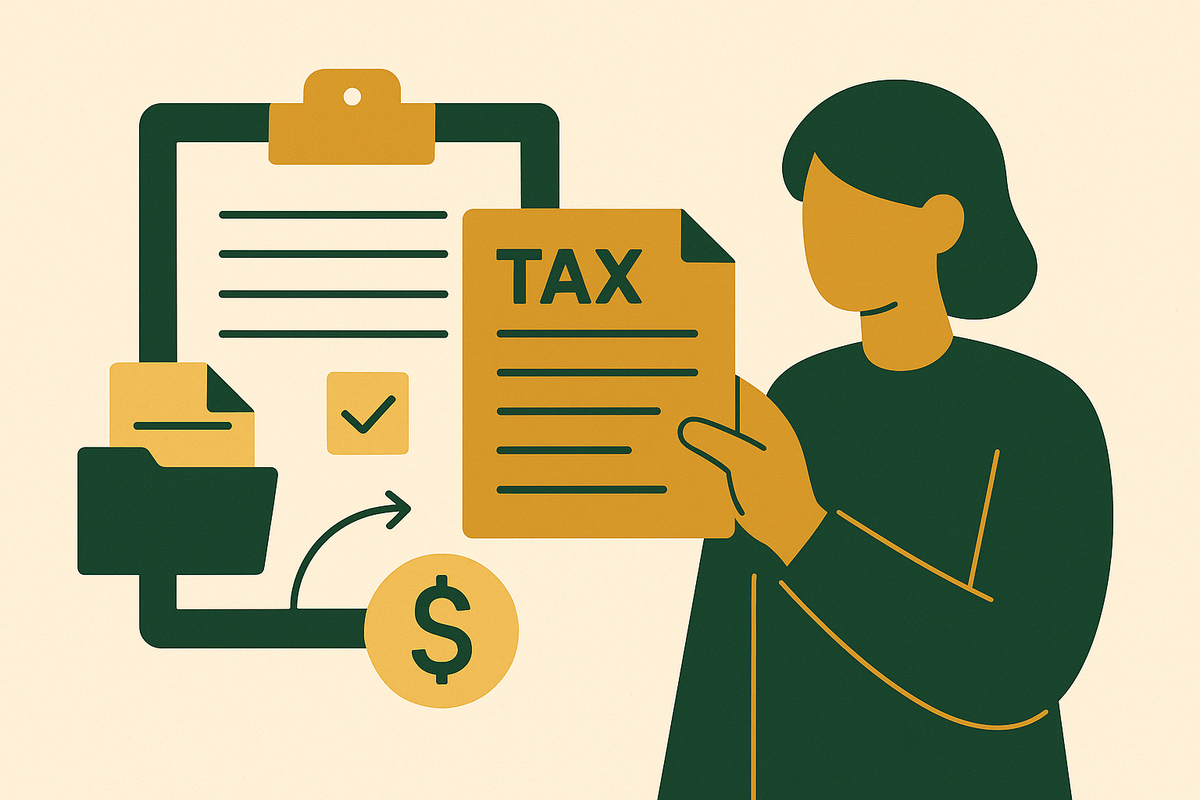
KYC gates at onboarding are the first line of defense. An AI-assisted onboarding flow can ingest identity data, trigger AML screening, apply internal risk models, and confirm policy compliance before an application advances, with low-risk cases moving forward in minutes rather than days. Tax compliance is where payout volume turns into legal exposure. Before funds leave the platform's account, the system must determine whether a payee is a US person, a foreign individual, or a foreign entity, which determines the withholding rate and which tax form is collected: W-9 for US persons, W-8BEN for foreign individuals, W-8BEN-E for foreign entities. Getting this wrong at volume means incorrect withholding across a large payee population.
Each international transaction must clear sanctions screening, country-specific bank field validation, and FX conversion before funds move, and these checks must run at the point of payment creation, not as a separate post-initiation step. The scheduler deserves the same attention. A rail-aware scheduler needs distinct code paths: cut-off and batch logic for ACH and GIRO runs, always-on logic for instant rails. One generic release job conflates the two and produces missed cut-offs or erroneous retries on instant rails.
Why payee type and corridor determine rail selection, not platform preference
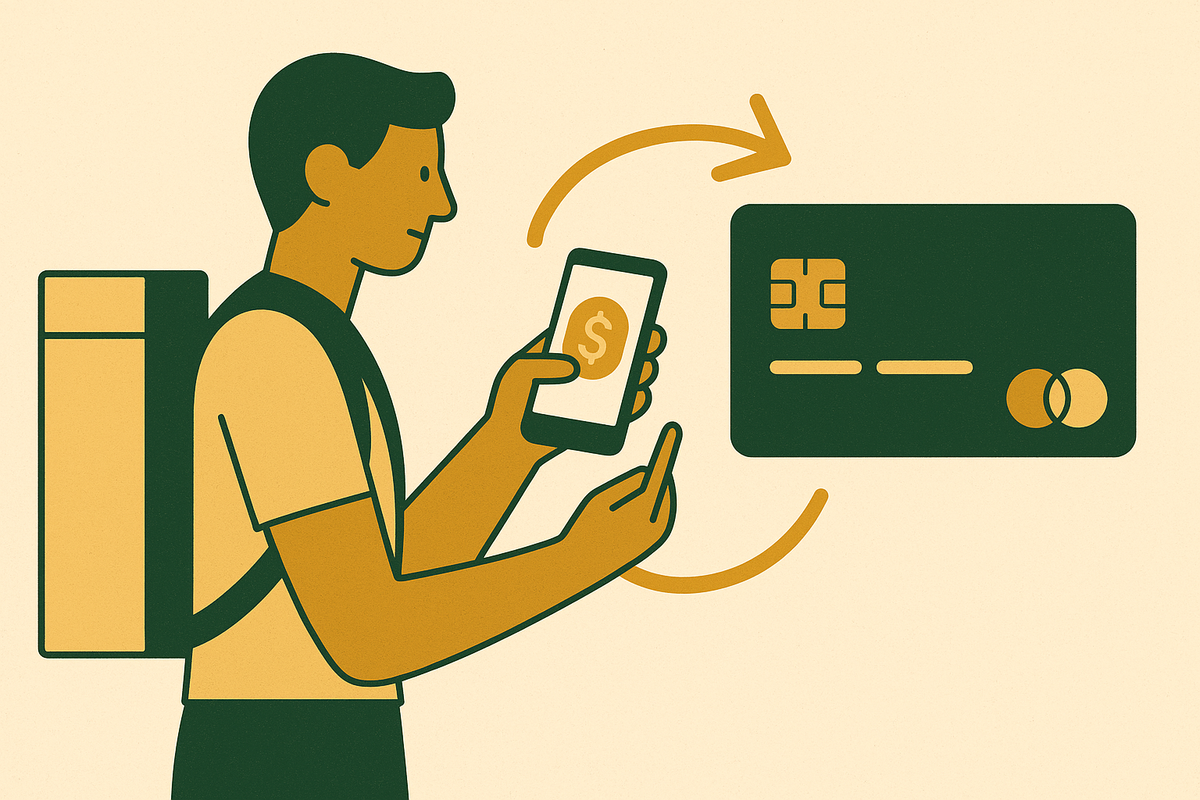
Rail selection made at the platform level rather than at the payee-corridor level guarantees that some population of payees is always on the wrong rail, too slow, too expensive, or unreachable. Payee type drives urgency requirements. A driver covering rent wants funds today. A seller with lower urgency accepts standard ACH if the fee is lower. A creator abroad needs local rails in their currency. If you offer a single payout method, you'll lose supply to apps with more flexibility.
A correctly configured system knows that a US driver with an RTP-eligible bank gets instant settlement, a contractor in Argentina gets local rails in pesos, and a payee missing bank details falls back to check without manual triage. The routing decision is automated, not handled case by case. Regional corridor logic follows established patterns. North America defaults to ACH for US payees, EFT for Canada, and push-to-card for payees without bank-transfer preference. Europe relies on SEPA across 36 countries with low-cost euro transfers, SEPA Instant where available, and wire as fallback. Latin America uses local bank transfer and e-wallet, with banking infrastructure varying widely by country. Asia-Pacific has a fragmented rail environment, so local methods are often required and real-time networks are expanding. Africa and the Middle East lean on mobile money and wire for mobile-first payee populations.
Most high-volume operators run a hybrid approach: local rails where available, SWIFT as the fallback for underserved corridors, and real-time networks where adoption warrants the integration cost. The objection that SWIFT is simpler to operate universally is undercut by its cost and settlement lag at scale. Delayed settlements generate support tickets, erode trust, and push payees to competitors who pay faster.
How payout speed functions as a supply-side growth lever, not just a cost center
Faster, more flexible payouts are a supply-side acquisition and retention mechanism. Platforms that treat payout speed as a cost to minimize cede their payee network to competitors who treat it as a product feature. When a driver finishes a Friday shift, a four-day ACH settlement is a reason to open a competing app. Instant payouts are the floor payees compare platforms against, not a premium feature. Apps offering three-day ACH lose talent to competitors providing same-day settlement, even when the slower payer has better commission splits. Payout speed becomes a growth lever because faster payouts increase weekly active supply, which reduces customer wait times and lifts conversion.
Different payees face different cash flow constraints. Tiered payout options mapped to payee urgency, real-time payments for immediate needs, same-day ACH for moderate urgency, standard ACH for cost-sensitive payees, and push-to-card for those without bank transfer preference, reduce friction, lift satisfaction, and reduce churn. Apps winning creator and worker retention in 2026 share a common architecture: API-first disbursement systems that handle thousands of payments without manual intervention, offer multiple payout rails, validate bank details during onboarding, and surface real-time payment status to payees.
The counterargument that instant rails are too expensive to offer universally is resolved by tiered optionality. The platform offers speed tiers at different cost points, so payees pick based on urgency and the platform recovers premium rail costs through fee pass-through or absorption offset by retention gains. The cost question becomes a product question.
Build vs. buy for payout infrastructure and where the threshold sits
Building payout infrastructure is the right choice for a narrow set of platforms. For most vertical SaaS companies, buying resolves in weeks what building takes nine to eighteen months to ship at production quality, and the build timeline grows when multi-rail coverage, compliant payee onboarding, and tax form filing for 1042-S and 1099-NEC are all required without payments engineers already on staff. The threshold is clean: build only if payments are the platform's core product. Buy if disbursements fund the people who deliver it. The distinction is between a platform whose competitive differentiation is the payment rail itself versus one whose differentiation is the vertical workflow, with payouts as a necessary function of that workflow. A modern payout infrastructure layer should cover what is needed without requiring the platform to build it: rail execution across ACH, RTP, FedNow, SWIFT, and local rails; compliance screening and beneficiary validation; W-8 and W-9 collection and 1042-S and 1099-NEC filing; ERP reconciliation; real-time webhooks and idempotency key support to prevent duplicate payments during network failures. API-first infrastructure that routes payments programmatically, with no human queuing at each step, handles volume spikes without added headcount, embeds compliance checks at the point of payment creation, and provides real-time per-transaction status visibility rather than batch-level status with delayed reporting.
Platforms embedding payout infrastructure within a broader payments strategy, spanning Pay In, Pay Out, and Pay Ops on one infrastructure, avoid the fragmentation cost of stitching together a separate payout vendor, a separate compliance layer, and a separate reconciliation tool. The operational coherence of a unified stack compounds in value as payout volume scales. The platform that designs its payout architecture deliberately, before scale forces the decision, is the platform that retains payees, controls costs, and operates without breaking.